Boiler Engineering
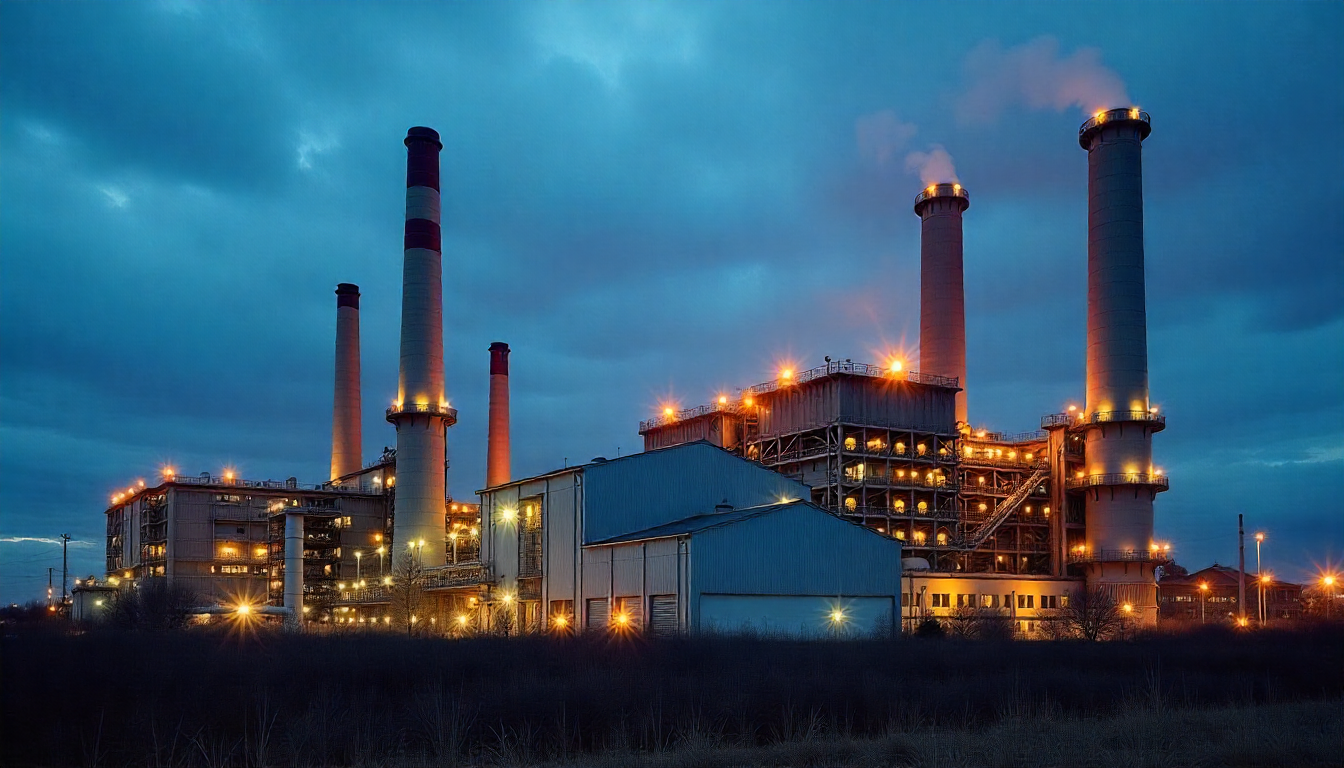
We deliver detailed engineering design for Fluidized Bed Combustion (FBC) and Waste Heat Recovery Boilers (WHRB), along with supporting structures.
Our focus is on achieving high efficiency, durability, and ease of fabrication.
Scope Includes:
- Pressure part design and analysis
- Combustion system design
- Structural modeling and detailing
- Heat recovery and Flue gas system design and detailing
- Instrumentation and Control system with process plant integration
- Thermal stress calculations and load evaluation
- Auxiliary system design - Feedwater system, Fuel handling system, Ash handling system
Designing a Boiler for Efficiency, Life and Fabrication
Three requirements pull against one another in boiler design. Efficiency asks for more heat transfer surface. Service life asks for lower stress and generous material margins. Fabrication cost asks for simpler geometry and standard sections. A design that optimises any one of them alone produces a boiler that is expensive to build, short-lived, or thermally disappointing.
Our detailed engineering for FBC and waste heat recovery boilers resolves that tension explicitly. Pressure part design and analysis establishes the safe envelope. Combustion system design and flue gas system detailing determine how efficiently heat is released and recovered. Thermal stress calculations and load evaluation confirm the design tolerates the cycling it will actually see — because most boiler damage is accumulated over years of start-ups and load changes rather than caused by a single event.
Structural modelling and detailing are carried out alongside, since boiler supporting structures carry substantial and thermally variable load. So are the auxiliaries — feedwater, fuel handling and ash handling — which in practice are what limit boiler availability more often than the boiler itself. Instrumentation and control system design completes the scope and integrates the boiler with the wider process plant, so its performance can be measured rather than assumed.
Boiler engineering connects directly to our thermal power plant engineering and structural engineering work, and boiler performance is a core subject of our energy audits. See our recent projects for the plants involved.
Boiler Engineering — Frequently Asked Questions
What types of boilers do you provide detailed engineering for?
We deliver detailed engineering design for Fluidized Bed Combustion (FBC) boilers and Waste Heat Recovery Boilers (WHRB), together with their supporting structures. The design focus throughout is high efficiency, durability and ease of fabrication — a boiler that cannot be fabricated economically is not a finished design.
What is included in boiler pressure part design?
Pressure part design covers the drums, tubes, headers and their supports, analysed for thermal stress and load. It is the element of a boiler with the least tolerance for error: pressure parts operate under simultaneous thermal and mechanical loading, and the stress calculations behind them determine both safety margin and service life.
What is the difference between an FBC boiler and a waste heat recovery boiler?
An FBC boiler burns fuel in a fluidised bed to raise steam, so its design centres on the combustion system, fuel handling and ash handling. A waste heat recovery boiler raises steam from hot gas produced by an existing process, so it has no combustion system of its own and its design centres on the flue gas path and heat transfer surface. The two carry different engineering risks and different auxiliary requirements.
Which auxiliary systems are engineered alongside the boiler?
Feedwater, fuel handling and ash handling systems, along with the flue gas system and its heat recovery surfaces. Boiler availability in practice is usually limited by an auxiliary system rather than by the boiler itself, which is why these are engineered as part of the same scope.
Is instrumentation and control included in boiler engineering?
Yes. Instrumentation and control system design is part of the scope, including integration with the wider process plant. A boiler that is not properly instrumented cannot be tuned, and cannot be shown to be operating at its design efficiency.
Why do thermal stress calculations matter for boiler design?
Because boiler components expand and contract through every start-up, shutdown and load change. Thermal stress calculations and load evaluation establish whether that cycling is within the material’s tolerance over the intended life. Omitting them does not cause an immediate failure — it causes cracking several years later.